【RPC】调用过程实例详解

文章目录
  1. 1. 0x01、生成 UUID 和模版(IDL)文件
  2. 2. 0x02、添加 acf 文件
  3. 3. 0x03、编译 idl 文件
    1. 3.1. 包含函数
  4. 4. 0x04、客户端
    1. 4.1. clientrpc.cpp
  5. 5. 0x05、服务端
    1. 5.1. serverrpc.cpp
  6. 6. 0x06、编译并运行
  7. 7. 0x07、运行示例
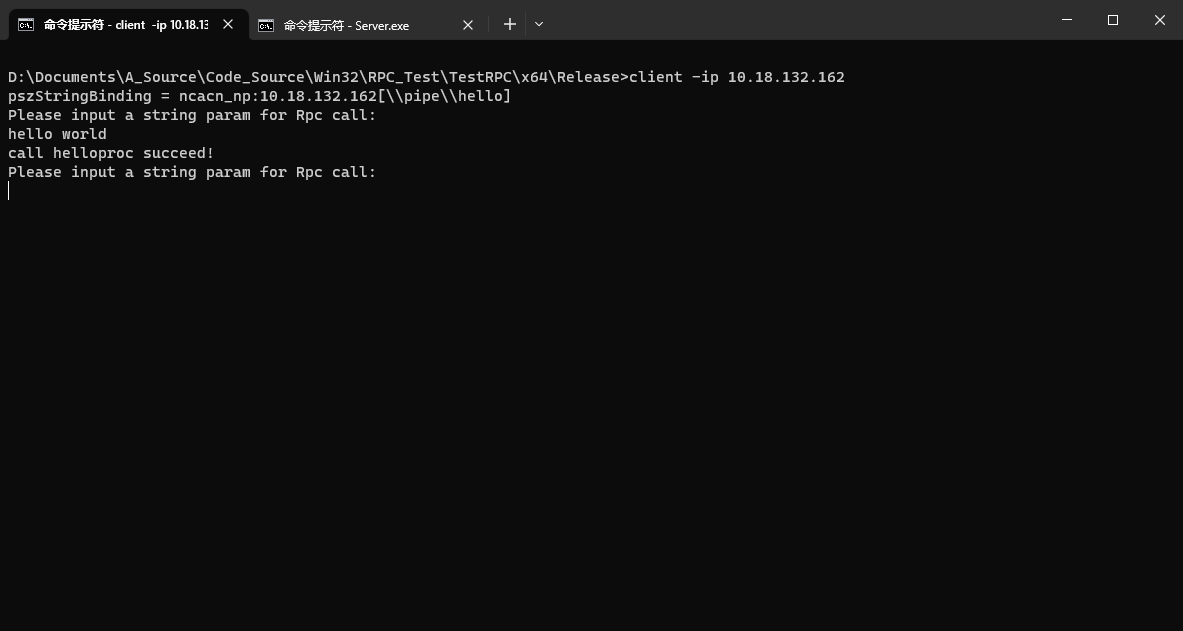
    1. 7.1. Client
    2. 7.2. Server

概述:windows 创建 RPC调用过程实例详解

[toc]

相关参考文章

0x01、生成 UUID 和模版(IDL)文件

定义接口的第一步是使用 uuidgen 实用工具生成通用唯一标识符(UUID)。UUID使客户端和服务端能够相互识别。该工具包含在阿庄平台软件开发工具包中(SDK)。

一般安装路径位于:D:\Windows Kits\10\bin\10.0.22621.0\x64

以下命令生成 UUID 并创建名为 Hello.idl 的模版文件。

1
uuidgen /i /ohello.idl

模版内容大致如下:

1
2
3
4
5
6
7
8
[
uuid(7a98c250-6808-11cf-b73b-00aa00b677a7),
version(1.0)
]
interface hello
{

}

在模版中添加接口:

1
2
3
4
5
6
7
8
9
10
//file hello.idl
[
uuid(7a98c250-6808-11cf-b73b-00aa00b677a7),
version(1.0)
]
interface hello
{
void HelloProc([in, string] unsigned char * pszString);
void Shutdown(void);
}

0x02、添加 acf 文件

acf文件内容如下所示,导出接口需要与 idl 文件一致:

1
2
3
4
5
6
7
//file: hello.acf
[
implicit_handle (handle_t hello_IfHandle)
]
interface hello
{
}

0x03、编译 idl 文件

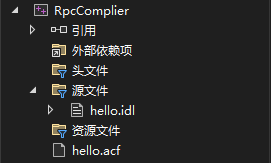
  1. 打开 visual studio,新建一个空项目

  2. 空项目中添加上述 idl文件 和 acf文件

  3. 编译项目

  4. 生成 hello_h.h、hello_c.c、hello_s.c

    • hello_h.h: 服务端和客户端共用文件
    • hello_c.c: 客户端文件
    • hello_s.c: 服务端文件

    需要补充说明的是,在 hello_h.h 头文件中有两个导出接口,导出接口即为rpc调用的接口。

    1
    2
    extern RPC_IF_HANDLE hello_v1_0_c_ifspec;
    extern RPC_IF_HANDLE hello_v1_0_s_ifspec;

包含函数

函数MIDL_user_allocate和MIDL_user_free用于为RPC存根分配和释放内存。

MIDL_user_allocate和MIDL_user_free在实现RPC应用程序时,它们必须在应用程序的某个地方定义,这里直接在主文件定义即可。

1
2
3
4
5
6
7
8
9
10
//在客户端和服务端实现中都要包含这两个函数
void __RPC_FAR* __RPC_USER midl_user_allocate(size_t len)
{
return(malloc(len));
}

void __RPC_USER midl_user_free(void __RPC_FAR *ptr)
{
free(ptr);
}

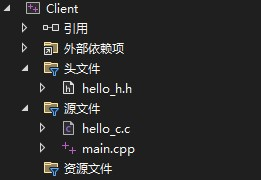
0x04、客户端

新建工程文件如下所示:

clientrpc.cpp

1
2
3
4
5
6
7
8
9
10
11
12
13
14
15
16
17
18
19
20
21
22
23
24
25
26
27
28
29
30
31
32
33
34
35
36
37
38
39
40
41
42
43
44
45
46
47
48
49
50
51
52
53
54
55
56
57
58
59
60
61
62
63
64
65
66
67
68
69
70
71
72
73
74
75
76
77
78
79
80
81
82
83
84
85
86
87
88
89
90
91
92
93
//client.cpp
#include <iostream>
#include <string>
using namespace std;


#include "hello_h.h"

#pragma comment(lib,"Rpcrt4.lib")


void doRpcCall();

int main(int argc, char** argv)
{
int i = 0;
RPC_STATUS status = 0;

unsigned char* pszNetworkAddr = NULL;
unsigned char* pszStringBinding = NULL;

for (i = 1; i < argc; i++) {
if (strcmp(argv[i], "-ip") == 0) {
pszNetworkAddr = (unsigned char*)argv[++i];
break;
}
}

status = RpcStringBindingCompose(NULL,
(unsigned char*)"ncacn_np",
pszNetworkAddr,
(unsigned char*)"\\pipe\\hello",
NULL,
&pszStringBinding);
if (status != 0) {
cout << "RpcStringBindingCompose returns: " << status << "!" << endl;
return -1;
}

cout << "pszStringBinding = " << pszStringBinding << endl;
status = RpcBindingFromStringBinding(pszStringBinding, &hello_IfHandle);
if (status != 0) {
cout << "RpcBindingFromStringBinding returns: " << status << "!" << endl;
return -1;
}

doRpcCall();

status = RpcStringFree(&pszStringBinding);
if (status != 0)
cout << "RpcStringFree returns: " << status << "!" << endl;

status = RpcBindingFree(&hello_IfHandle);
if (status != 0)
cout << "RpcBindingFree returns: " << status << "!" << endl;

cin.get();
return 0;
}

void doRpcCall(void)
{
char buff[1024];
RpcTryExcept{
while (true) {
cout << "Please input a string param for Rpc call:" << endl;
cin.getline(buff, 1023);
if (strcmp(buff, "exit") == 0 || strcmp(buff, "quit") == 0) {
Shutdown();
}
else {
HelloProc((unsigned char*)buff);
cout << "call helloproc succeed!" << endl;
}
}
}

RpcExcept(1) {
unsigned long ulCode = RpcExceptionCode();
cout << "RPC exception occured! code: " << ulCode << endl;
}
RpcEndExcept
}

void* __RPC_USER MIDL_user_allocate(size_t len)
{
return (malloc(len));
}

void __RPC_USER MIDL_user_free(void* ptr)
{
free(ptr);
}

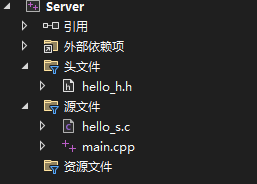
0x05、服务端

新建工程文件如下所示:

serverrpc.cpp

1
2
3
4
5
6
7
8
9
10
11
12
13
14
15
16
17
18
19
20
21
22
23
24
25
26
27
28
29
30
31
32
33
34
35
36
37
38
39
40
41
42
43
44
45
46
47
48
49
50
51
52
53
54
55
56
57
58
59
60
61
62
63
64
65
66
67
68
69
70
71
72
73
74
75
76
77
78
79
80
81
#include <iostream>
using namespace std;

#include "hello_h.h"

#pragma comment(lib,"Rpcrt4.lib")

int main(void)
{
RPC_STATUS status = 0;

unsigned int mincall = 1;
unsigned int maxcall = 20;

status = RpcServerUseProtseqEp(
(unsigned char*)"ncacn_np",
maxcall,
(unsigned char*)"\\pipe\\hello",
NULL);
if (status != 0) {
cout << "RpcServerUseProtseqEp returns: " << status << endl;
return -1;
}

status = RpcServerRegisterIf(
hello_v1_0_s_ifspec,
NULL,
NULL);
if (status != 0) {
cout << "RpcServerRegisterIf returns: " << status << endl;
return -1;
}

cout << "Rpc Server Begin Listening..." << endl;
status = RpcServerListen(mincall, maxcall, FALSE);
if (status != 0) {
cout << "RpcServerListen returns: " << status << endl;
return -1;
}

cin.get();
return 0;
}

/************************************************************************/
/* MIDL malloc & free */
/************************************************************************/

void* __RPC_USER MIDL_user_allocate(size_t len)
{
return (malloc(len));
}

void __RPC_USER MIDL_user_free(void* ptr)
{
free(ptr);
}

/************************************************************************/
/* Interfaces */
/************************************************************************/

void HelloProc(unsigned char* szhello)
{
cout << szhello << endl;
}

void Shutdown(void)
{
RPC_STATUS status = 0;

status = RpcMgmtStopServerListening(NULL);
if (status != 0) {
cout << "RpcMgmtStopServerListening returns: " << status << "!" << endl;
}

status = RpcServerUnregisterIf(NULL, NULL, FALSE);
if (status != 0) {
cout << "RpcServerUnregisterIf returns: " << status << "!" << endl;
}
}

0x06、编译并运行

分别编译客户端和服务端程序,得到 server.exe 和 client.exe

  1. 先运行 server.exe
  2. 在 client.exe 目录运行 client -ip 192.168.106.128 来启动客户端程序并与服务器端相连
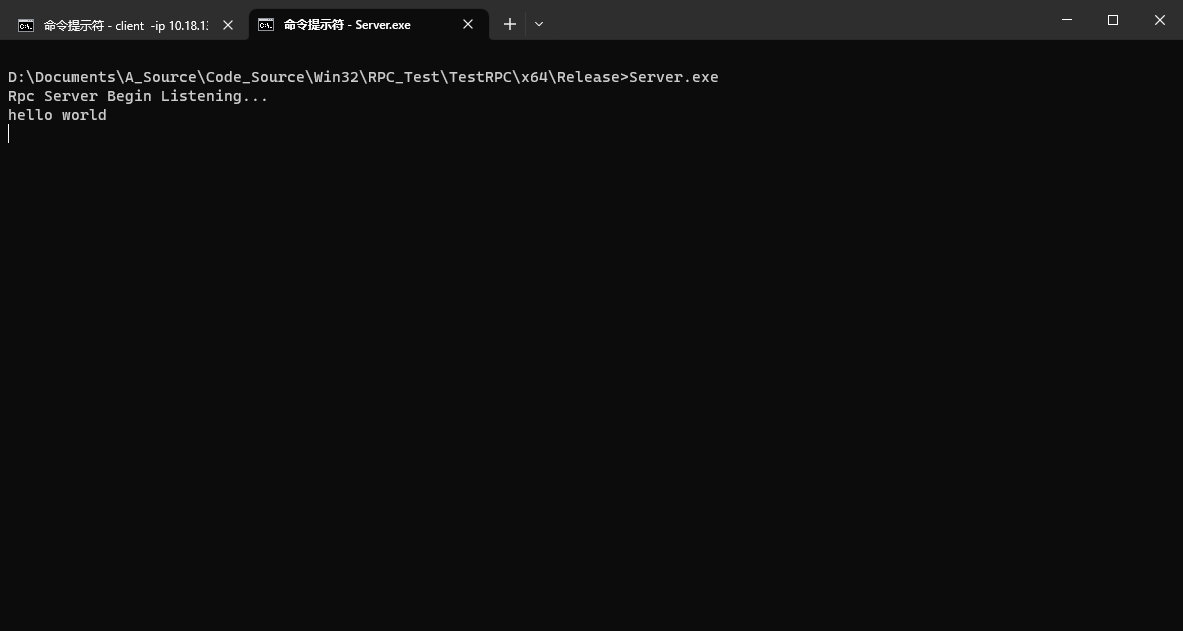
  3. 在 client 的窗口输入任意字符串,回车后可看到server窗口上有显示
  4. 在 client 窗口内 输入 exit 或 quit, server 窗口关闭

0x07、运行示例

Client
Server